|
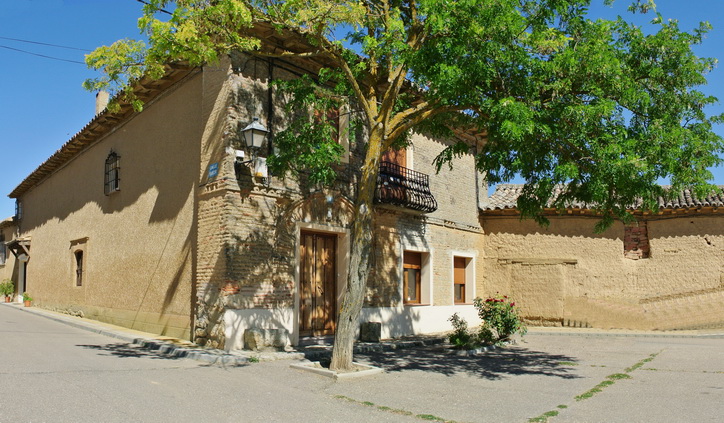
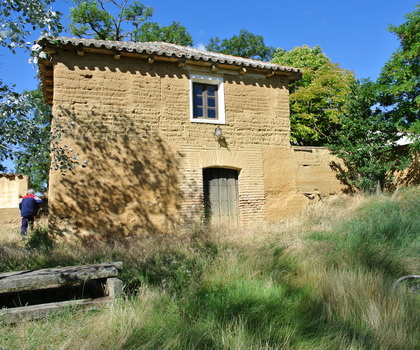
Brick and plaster are often used as facings for rammed
earth. Often brick is laid into the walls or faced with brick in
regular rectangular frames, where earth can be seen in the frame or
may be plastered over in the brick frame. However when rammed earth
and adobe are used together often just plaster is used, blurring the
line between the two technologies.
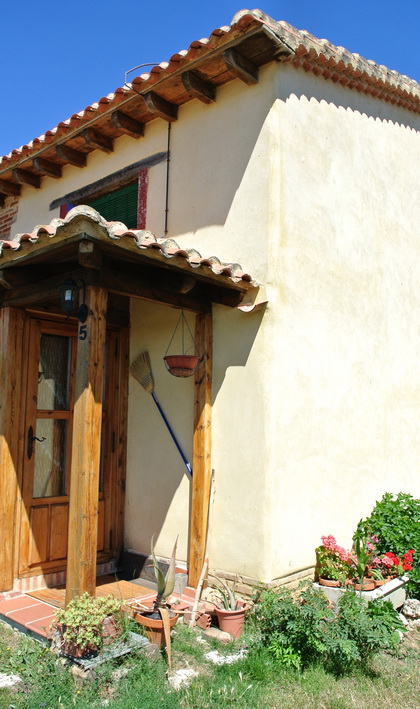
Continuing with this tradition the
Amayuelas
bioclimatic earthen housing project, selected in the 2002 Best
Practices for the
Improvement of the Urban Environment Context mixes a lot of different
technologies.
Typically houses are rammed earth on the ground floor,
adobe above, with wooden floors and roof structure. They are also lime
plastered. The whole site is clustered together giving outside spaces
which are communal and intimate.
As well as winning prizes and making homes the project
launched a resurgence in earth building knowledge, businesses and
business. It's well worth a visit, in a region which is also home to
Estepa Association, a fantastic earth building group involved in
training, new build and conservation of the existing cultural
heritage.
Possibly the most amazing structures common across the
Palencia region are the
rammed earth pigeonaires, or dovecots. These extraordinary
structures push rammed earth to some amazing limits, typically
building two or three layers of walls one inside the next to increase
the internal surface area of the building. These then have hundreds of
individual niches cut into them to house the pigeons or doves.
Pigeonaires are square, polygonal or circular,
stretching formwork technology further for buildings for birds than
for humans. They often have complex roofs which capture rainwater for
the birds to drink, and have their own associated wells, probably a
source for the wall building materials as the were dug out.
Architectural forms for people continue to be quite
traditional, square buildings of two storeys remain the norm. The
exciting shapes of the pigeonaires have not so far inspired
experimentation in buildings for people, but their existance is a
|